


Every profession has its common mistakes. For journalists, frequent mistakes can range from commonly misspelled words to subject-verb agreement. For those in the food service industry, slip-ups include placing incorrect orders or not preparing a dish according to its recipe. And for roofing workers, mistakes can occur during roof system specification writing and system installation.
To help illustrate correct low-slope installation techniques and some common mistakes made in the field, Denver-based Johns Manville set up a photo shoot at its Rockdale, Ill., plant for Professional Roofing. Following is a selection of some roofing dos and don'ts documented by the photos taken.
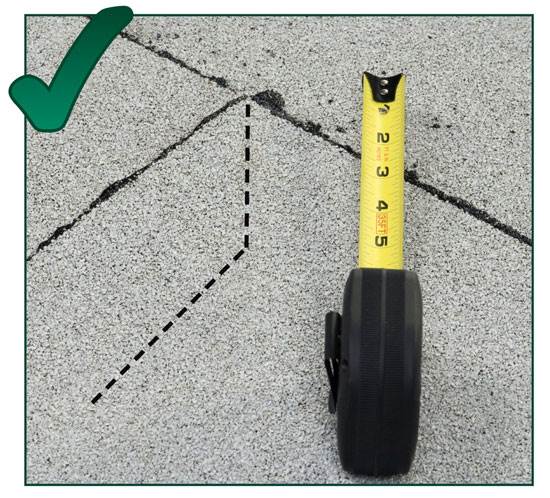
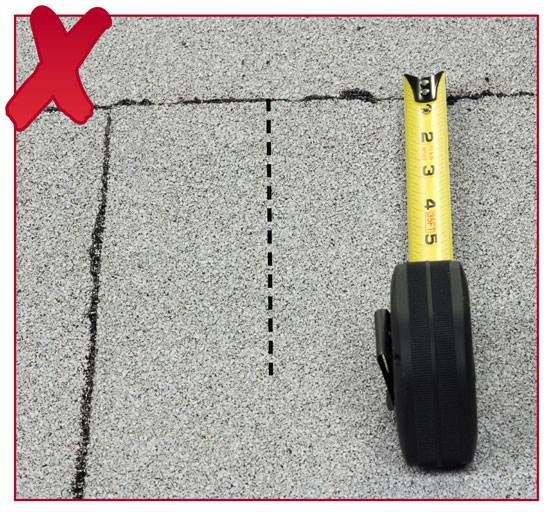
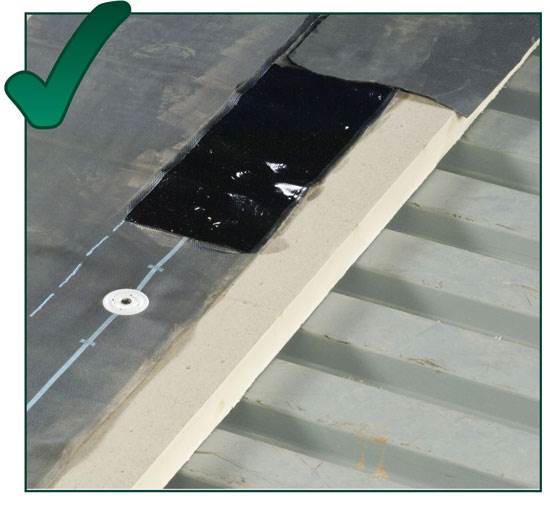
For a properly installed bituminous T-joint configuration, the middle sheet needs to be cut at a 45-degree angle as shown in the photo on the left. T-patches are not necessary. Because bituminous products are thicker than single-ply membranes, cutting the middle ply helps provide a more gradual transition through the T-joint when seaming. The photo on the right shows a T-joint without a 45-degree angle, allowing for a possible void.
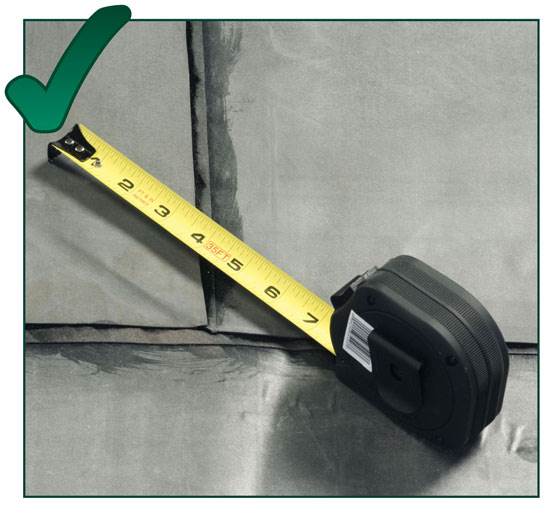
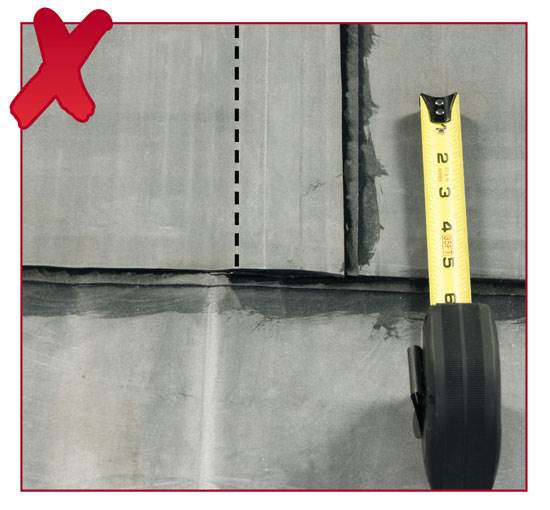
For EPDM membranes, T-joint seams can be made with 3- or 6-inch tape. When using 6-inch tape, making a 45-degree cut is crucial (as shown in the photo on the left). If a cut is not 45 degrees, the T-joint will move back 6 inches and may not be covered by a T-patch as illustrated in the photo on the right.
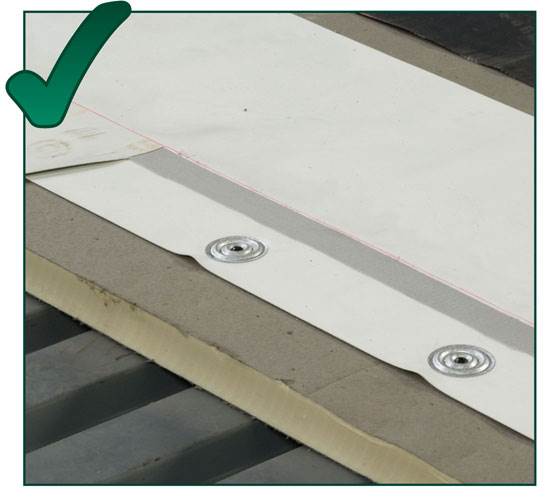
This photo shows proper placement of fasteners for PVC and TPO membranes. Fasteners should be placed behind the seam (12 inches on center) and screwed into the top of the steel flute. Fasteners and plates should be installed a minimum of 1/2 of an inch from a membrane's edge and screwed into a metal deck's top rib.
Correctly placing fasteners into a reinforced EPDM membrane requires installing fasteners 12 inches on center so the plates are in the center of the seam under the 6-inch seam. Fasteners should be screwed into the top of a steel flute.
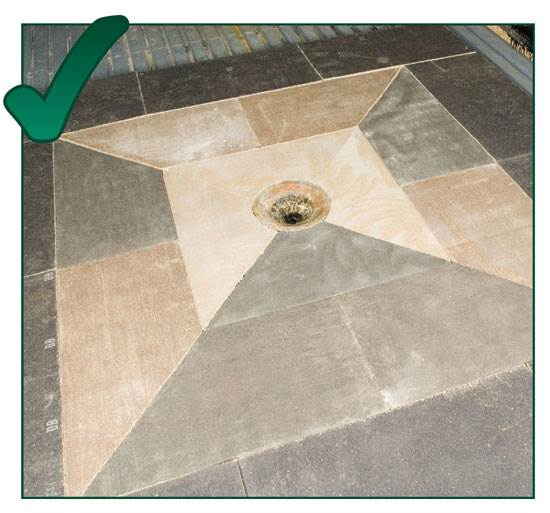
In this photo, sheets of insulation taper to properly sump to a drain for a bituminous system. This taper rate better accommodates bituminous systems, which are less flexible than PVC membranes. An 8-inch sump is used so the membrane gradually can change angles as needed.
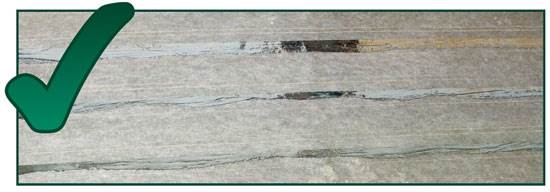
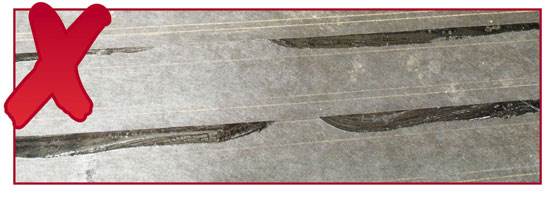
When hot mopping asphalt, the correct lap technique involves having hot asphalt continuously bleed out along the entire length of a lap while penetrating the felt, as shown in the top photo.
 |
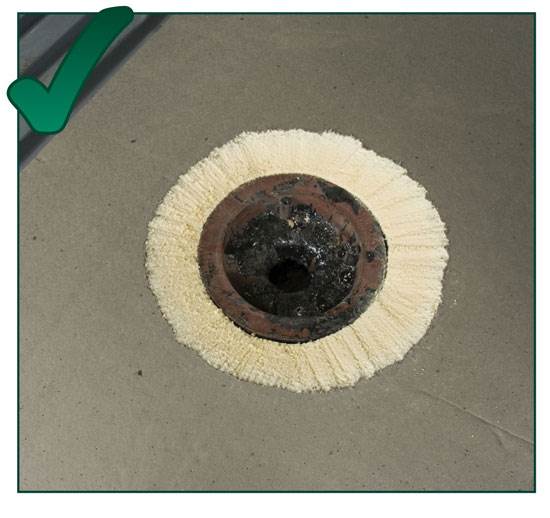
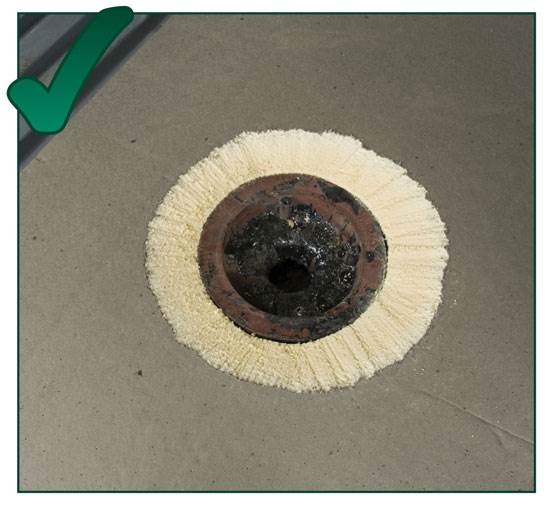
This photo shows a shaved sump for a single-ply system. Single-ply membranes can accommodate drastic angle changes because of the flexibility of unreinforced membranes. This single-ply system was applied after tearing off a bituminous system (note the asphalt in the drain cavity).
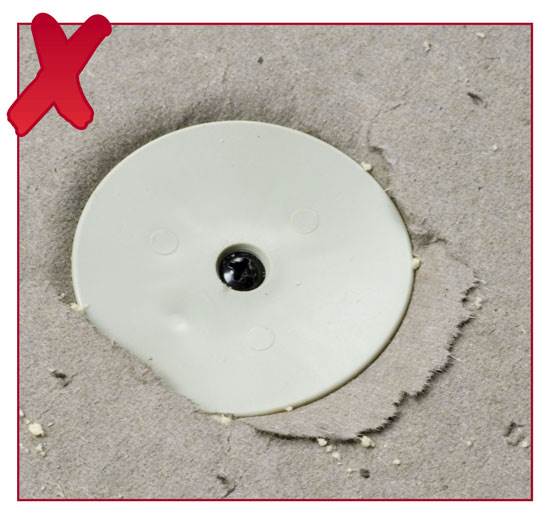
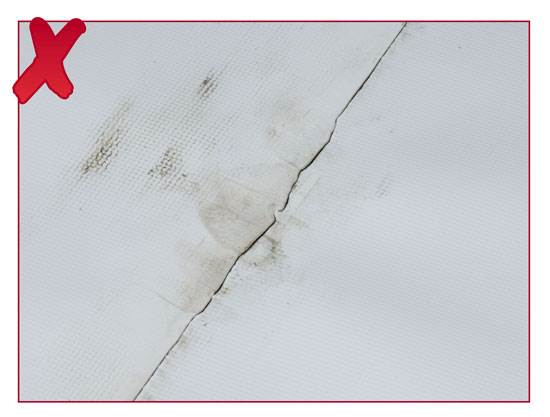
Overdriven fasteners can cause insulation to fracture, compromising the integrity of the insulation and causing a void or depression in the surface that will receive a roof membrane.
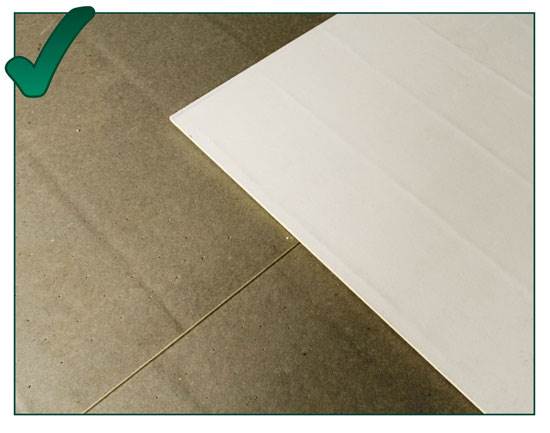
Staggered joints are necessary on an insulation and cover board system. The first layer is the primary insulation and provides stability. Subsequent insulation layers or cover board joints should be staggered to prevent thermal shorts throughout the system. Joints from the bottom layer should not contact the top layer.
If a TPO membrane is overheated, it will distort, will not weld together and will require a patch. An overheated PVC membrane will burn. Although an overheated PVC membrane may weld together, it still will require a patch because the burned area prematurely will age the PVC membrane.



COMMENTS
Be the first to comment. Please log in to leave a comment.