
 Photo courtesy of Miami-Dade County Building Department.
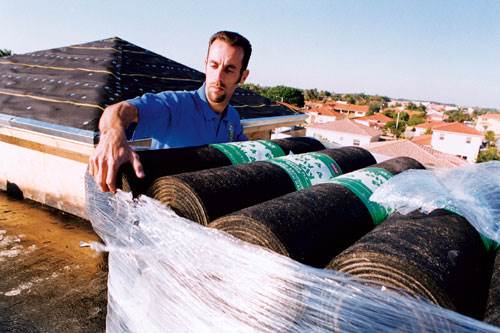 Photo courtesy of Miami-Dade County Building Department.
 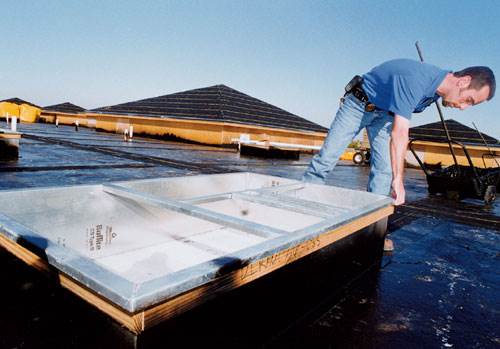 Photo courtesy of Miami-Dade County Building Department.
  Photo courtesy of Miami-Dade County Building Department.


Roofing contractors know strong winds can rip off roofs and blow down walls. And nowhere were the effects of strong winds on roofs more apparent than in south Florida after Hurricane Andrew hit Aug. 24, 1992.
As a result of wind gusts clocked at 165 mph (25 km/h), catastrophic damage occurred to buildings and structures. Hurricane Andrew recently was upgraded by the National Oceanic and Atmospheric Administration (NOAA) in 2002 from a Category 4 hurricane to a Category 5 hurricane, the highest on the Saffir-Simpson Hurricane Scale.
Hurricane Andrew directly was responsible for 23 fatalities and about $25 billion in damages, according to NOAA. The devastation Hurricane Andrew caused clearly illustrates how important roofs are to buildings. Once a building envelope is breached by the loss of a roof, structural and content damage quickly escalate. That is why a primary objective of the construction permitting process, which includes roof permits, is to protect the public from catastrophic loss.
It is important contractors comply with applicable building codes and life safety requirements before, during and after any construction project. Verifying compliance with building codes is one of the main functions of the Miami-Dade County Building Department, which enforces the High Velocity Hurricane Zone (HVHZ) portion of the Florida Building Code. Miami-Dade and Broward counties, Fla., are the areas that fall under HVHZ jurisdiction. Following is information about Miami-Dade County's requirements and how they are achieved.
Background
Roofing contractors in other U.S. regions are familiar with the construction permitting process and building codes used in their areas of operation. The purpose of this article is to illustrate the roofing requirements mandated by the Florida Building Code and how the Miami-Dade County Building Department verifies compliance with the code's roofing portions. Many design professionals, specifiers and consultants believe the HVHZ portion of the Florida Building Code has some of the most stringent roofing requirements in the United States.
The responsibilities carried out by the Miami-Dade Building Department include reviewing plans, issuing permits, conducting construction inspections and performing enforcement activities as required by the Florida Building Code and other applicable regulations. Currently, the building department employs about 350 people in various classifications, such as roofing plans examiners, roof inspectors and permit clerks.
The permitting and inspection process in Miami-Dade County has evolved as a consequence of the tremendous devastation caused by Hurricane Andrew. One way the building department has been improving its offerings has been by adding progressive and interactive services available to the public through the use of advanced technology. Some services include Internet access to the building department, real-time inspection results and online permitting. These services enhance accountability, efficiency and responsiveness to the industry and public while enforcing building code regulations.
The building department also ensures roof assemblies are installed to meet HVHZ requirements of the Florida Building Code through its use of a dedicated roofing section. The department's roofing section is composed of licensed and experienced roof inspectors and roofing plans examiners. The combination of roofing plan reviews and job-site roof inspections helps meet the goal of quality roof system installations.
Plan review
The objective of a roofing plan review process is to ensure compliance of a proposed roof system with the HVHZ portion of the Florida Building Code. Per the code, roof system assembly items such as the type of roof system, roofing materials, fastening requirements, flashings, roofing details, and fire-resistance and wind-resistance ratings are required to be reviewed.
In particular, a roof assembly's wind-resistance rating especially is important because of the hard lessons learned from Hurricane Andrew. Therefore, buildings, structures and parts thereof are required to withstand the minimum wind loads determined by structural calculations. These wind-load calculations are based on Section 6 of ASCE 7-98, "Minimum Design Loads for Buildings and Other Structures." In Miami-Dade County, the basic wind velocity used in calculations is 146 mph (235 km/h) (based on a 3-second gust). The basic wind speed in Miami-Dade County is among the highest found in the continental United States per the wind speed map found in ASCE 7-98.
The roof permit review process begins with applicants submitting a Uniform Roof Permit Application, which details the proposed roof assembly and job-site conditions for review. Attachments to the Uniform Roof Permit Application include a fire directory listing, product control approval, roof plan diagram, applicable detail drawings, and any required testing or calculations. The roofing plans examiner reviews the application and any attached documents to determine whether the proposed roof assembly complies with the code. This is the first step in the permitting process and the place to find any errors or deficiencies in the application before a roof permit is issued.
Additionally, all roof components, roof systems and roof assemblies used in Miami-Dade County must have a valid Miami-Dade County Product Control Approval System Notice of Acceptance (NOA). An NOA is proof a roofing material or roof system has been tested to meet the strict requirements of the HVHZ portion of the Florida Building Code.
The plan review process relies on standards provided in the code's HVHZ portion to verify the integrity of roof systems and roof decks. These standards maintain consistency of roof system installations and inspections.
For example, Roofing Application Standards are provided for contractors to use when applying for roof permits. These standards provide procedures, formulas and methods for installing roof systems based on the code and good roofing industry practices. Some application standards include attachment of wood blocking, metal flashings, asphalt shingle installation, bonding or mechanically attaching insulation panels, base and/or anchor sheet attachment, and installation of single-ply membranes. Also included are tables to determine wind-uplift pressures for low- and steep-slope roof systems up to 40 feet (12 m) in mean height.
Testing Application Standards also are supplied in the code's HVHZ portion for testing various roof components or roof assemblies. An example of a test procedure is fastener-withdrawal (pull-out) resistance testing, which provides a method of confirming field fastener performance in existing roof decks. Pull-out tests are submitted with a roof permit application for decks that include gypsum, lightweight concrete, cementitious wood fiber or steel. The base sheet or insulation fasteners to be used in a roof assembly are tested to determine whether a fastener will perform as required. This test helps ensure a roof deck is suitable for reroofing applications.
Other test procedures include on-site uplift-resistance testing of existing roof assemblies, roof moisture surveys, and static uplift testing of mortar or adhesive-applied tile roof systems.
The standards of Testing Application, Roofing Application, Product Control Approval and wind-resistance requirements help ensure roof assemblies installed in Miami-Dade County comply with HVHZ code requirements.
Roof permit applications typically are reviewed, approved or rejected within one day to two days. If plans are rejected, review comments are provided pertaining to the rejected items.
Roofing plans examiners are available to answer questions regarding review comments or code requirements in person, by e-mail or via telephone. Roofing plans examiners in Miami-Dade County must meet qualifications for employment that include but are not limited to possession of a certificate as a roofing contractor and 10 years of experience in the roofing industry. Roofing plans examiners must have considerable knowledge of the methods and practices involved in the construction and installation of roof systems and building envelopes.
Currently, the Miami-Dade County Building Department employs two full-time roofing plans examiners who reviewed and approved about 11,120 roof permits in fiscal year 2002-03.
Roof inspections
After permit documents have been reviewed and approved, a roof permit can be issued. Once a roofing contractor pays for and obtains the required permit, roofing work can begin. Roof permits in Miami-Dade County cost 8 cents a square foot for built-up and asphalt shingle roof systems; tile roof systems cost 10 cents a square foot. An average residential permit for a combination of tile and built-up roofing is about $275 (for about 2,600 square feet [242 m²]). Commercial roof systems usually range from $500 to $600 or more depending on a roof's total square footage. Contractors obtain discounts on permit fees when the total area of a roof system exceeds 30,000 square feet (2787 m²). Inspections are required during the various stages of construction and after roof system completion.
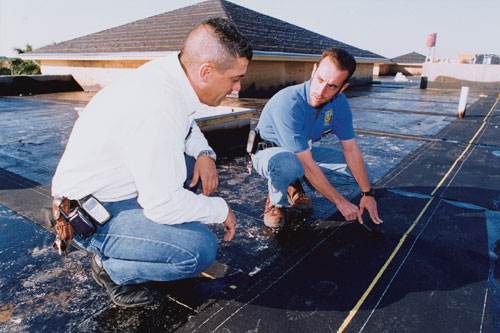
The primary role of roof inspectors with Miami-Dade County's Building Department is to conduct field inspections of roof system installations. At a job site, an inspector will verify roof systems, materials and details are installed per code requirements and as shown on an approved Uniform Roof Permit Application or approved building plans. The Building Department's Roof Inspections Section consists of 11 inspectors and three supervisors. On a daily basis, the department's roof inspectors average 25 or more roof inspections during various stages of progress. They accounted for more than 56,193 roof inspections in fiscal year 2002-03.
The qualification requirements to be a roof inspector are a current certificate as a roofing contractor and minimum of five years' experience in the roofing industry. The five years' experience in the roofing industry must include two years in a supervisory capacity. These qualification requirements ensure roof inspectors have the technical ability and experience to conduct field inspections of roofing projects to verify compliance with the Florida Building Code and established industry standards.
Roof inspectors also are readily accessible to the industry. They meet with the public at the building department in the mornings, or customers can speak with inspectors by telephone. The inspectors also can maintain contact with their supervisors at all times with cell phones and wireless laptop computers when they are on the road. Via the wireless capabilities of laptop computers, the roof inspector supervisor can reassign, add or cancel inspection requests made by contractors after the inspectors have left the office. This ability to communicate allows for coordination of unforeseen scheduling issues with field inspectors if required.
The building department also provides services through an interactive Web page that allows contractors to perform a multitude of tasks that includes obtaining permits online (e-permitting), tracking the status of plans, viewing plan review comments, ordering inspections, canceling inspections and obtaining a map route for the inspectors' order of inspections for that day. The inspector's map route on the Web page also displays the inspector's name, photo and telephone number. No longer does a contractor have to guess who the inspector will be or the approximate time of an inspection.
In addition, contractors can obtain results of roofing or building inspections as the field inspector completes them by accessing the Web page. Inspectors enter the outcomes of their inspections into their wireless laptop computers while at job sites.
The ability to obtain an inspector's comments within minutes of an inspection saves time and money for roofing contractors. Knowing the results of the inspections enables contractors to schedule crews and the order of work more efficiently. This makes real-time inspection results a considerable benefit to the industry and public.
The building department's vehicles also are equipped with global positioning system devices, which enable the Web page to display the location of the vehicles at all times. As each job-site inspection is completed, the status and location of the inspector is updated on the map route table.
Roof inspectors also have trucks with ladders that enable them to access most one-story buildings, which greatly expedites residential inspections. This added feature also means contractors do not have to leave a ladder on-site and be held liable for any accidents that could occur because of an unattended ladder.
The Florida Building Code minimally requires roof system inspections to include inspection of dry-in, insulation, roof coverings, flashings and a completed roof system. In Miami-Dade County, anchor sheet inspections are required during the installation of base sheets, anchor sheets, underlayments and/or insulation. Such an inspection gives a roof inspector the opportunity to check fastening requirements to be used based on roof deck type or roof system type.
When an asphalt primer is required for structural concrete decks, the anchor sheet or insulation inspection is the time to check that it has been installed. Wood blocking is checked during an inspection for correct size, type and attachment per the approved permit documents.
The first in-progress inspection allows a roof inspector to verify the roofing products to be installed in Miami-Dade County are identified with an NOA number or logo, manufacturer's identifying marks or any other method allowed by the Florida Building Code. For example, roll goods that meet ASTM International standards are marked with a yellow line to demonstrate compliance.
These in-progress inspections are for prepared roof coverings that include asphalt shingles, wood shakes and metal roof panels. A roof inspector will verify the slope of a roof deck matches the permit application and is adequate for the type of roofing material being installed. For example, during an asphalt shingle in-progress inspection, the shingles are checked for a product approval label and correct placement and to determine whether the six required ring shank nails per shingle have been installed.
Another type of inspection is of the cap sheet installation for tile roofs. The typical tile underlayment is an ASTM-approved mineral-surfaced cap sheet, which is checked for the correct application of hot asphalt and back nailing. Following the cap sheet installation inspection is a tile placement inspection. A roof inspector will check that the tile is installed per the product control approval requirement. Roofing tiles in Miami-Dade County are approved to be installed using mechanical attachment, mortar or adhesive.
If expanding foam adhesive is used, a roof inspector will check that the materials and adhesive application comply with manufacturer's specifications. The size and placement of the adhesive also are checked.
Once all intermediate inspections are completed and approved and a roof system is completed, a contractor can either call for a final roof inspection or order an inspection online.
A field inspector will check that the roof has been completed to include all required details and that the job site has been left clean. The inspector's final approval will close out the roofing permit.
Challenges
Although Miami-Dade County has sought to make installing approved roof systems easier, conflicts sometimes can arise at job sites when conditions fall into gray areas not clearly defined by code requirements. This can be frustrating to all concerned if good roofing practices are not considered.
When problems arise, contractors, inspectors and reviewers must communicate with each other to reach a consensus.
One solution is that the HVHZ portion of the Florida Building Code allows alternative details to be proposed that address specific needs of a job. A building inspector/reviewer may accept a detail if it is demonstrated that the intent of the code is met by a given proposal. Unfortunately, sometimes a consensus can't be reached or the code cannot be met by the proposed roof system or roofing detail. At this point, the process of inspection and permit review can prevent a roof system or detail from being installed incorrectly, allowing the contractor the ability to make corrections.
Bettering the industry
The construction permitting processin Miami-Dade County clearly has evolved as seen by the use of innovative and modern features that have been provided to better serve the roofing industry. The Miami-Dade County Building Department has raised the bar with these applications of advanced technology and experienced roof inspectors and plans examiners to ensure compliance with the roofing code requirements of the HVHZ portion of the Florida Building Code. No matter in what U.S. region a roofing project is located, Miami-Dade County's building and roof permit review, approval and inspection procedures can help ensure all roof types meet local code requirements.
Boris Sursky is a roofing plans examiner with the Miami-Dade County Building Department.


COMMENTS
Be the first to comment. Please log in to leave a comment.