
During the past few years, immigration has roared back into the national conversation with the urgency of “The Rising.” Illegal border crossings skyrocketed; court backlogs grew; and the rhetoric heated up.
Those in the federal government have long sought solutions, yet somehow, always ended up where they started: “Backstreets” negotiations, familiar talking points, noise and some action but no comprehensive answer.
For the roofing industry, this has become a “Long Walk Home.” Contractors are still “Working on the Highway,” still trying to run businesses, hire crews and meet demand while federal immigration policy remains stuck like a “10th Avenue Freeze Out.”
Policy has changed this past year, but it’s still only addressing one side of a two-sided album. In the current enforcement-only dynamic, we are risking our economic growth by not meeting the workforce needs of the businesses necessary to Build America Great Again. It’s a mechanism that doesn’t reflect economic reality, doesn’t serve workers or employers particularly well, and leaves entire industries stuck “Dancing in the Dark.”
This isn’t about left or right. It’s about reality. Roofing contractors are “Tougher than the Rest,” proud to employ American workers “Born in the USA,” but we’re still short on them. We recruit aggressively, invest in training, and support career and technical education. Many companies have built strong internal pipelines, apprenticeship programs and advancement tracks that offer not only jobs but also real, American Dream-fulfilling careers.
But even with these efforts and cultural shifts, the labor gap persists. Demographics are working against us. The workforce is aging. Americans are having fewer kids. And though more young people are entering the trades than ever, we’re still at a deficit, and that deficit will likely remain until or unless the economy dramatically slows.
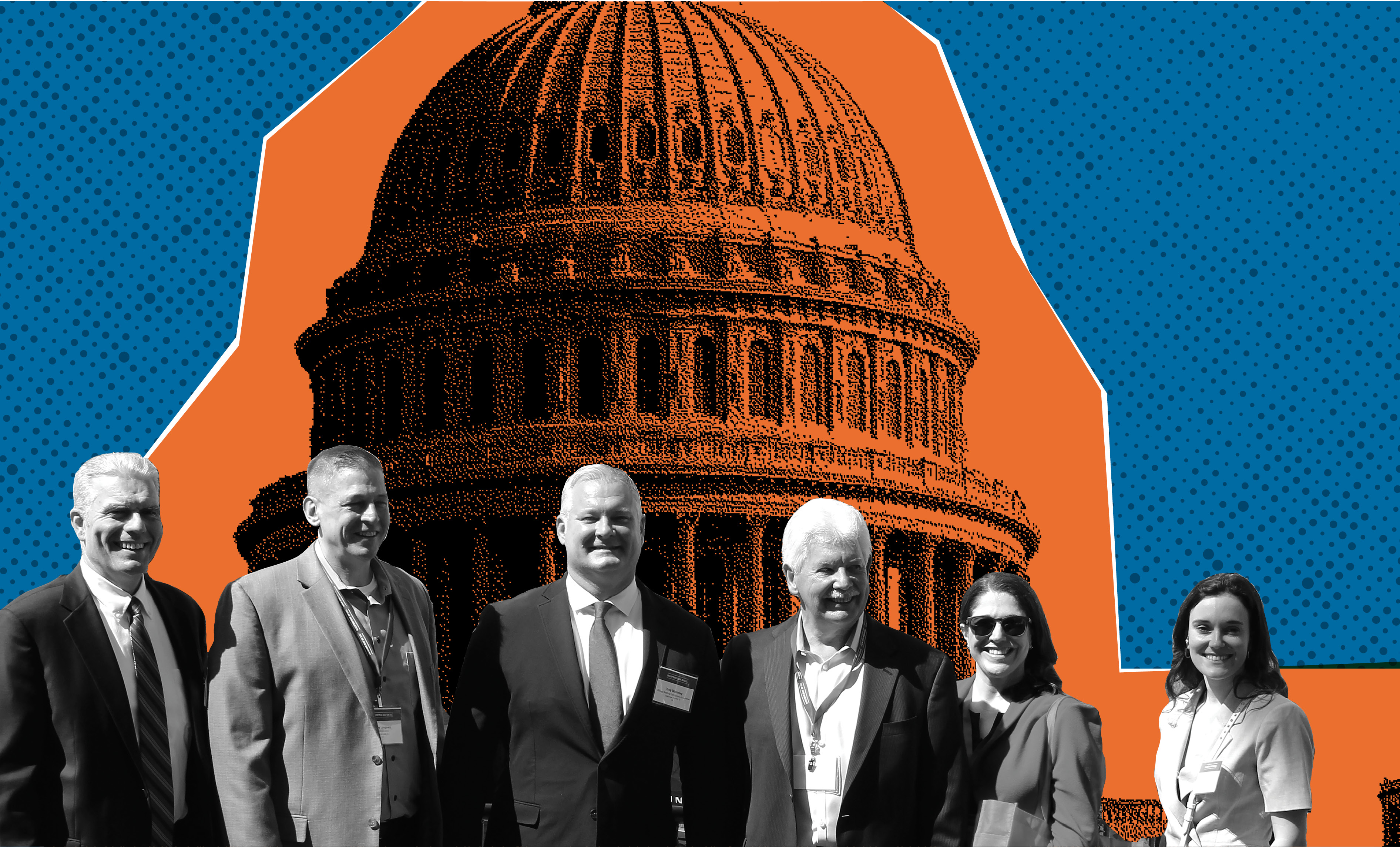
NRCA recently helped lead the eighth annual Roofing Day in D.C. to advocate and educate policymakers regarding the needs of our industry, and immigration was a sizable topic. The association has endorsed the Dignity Act and Essential Workers for Economic Advancement Act, which would allow necessary workers to enter legally through a market-driven system that addresses the needs of the economy and protects American workers.
This legislation is vital as the number of native-born workers declines and the demand for roofing work continues to grow as a result of aging infrastructure, energy upgrades, population shifts, and increased construction of manufacturing facilities and data centers. If Washington, D.C., wants to create a U.S. manufacturing renaissance, it will take workers to do it. Until Tesla’s Optimus is able to install a shingle or weld a flashing,the roofing industry and the nation need a solution.
The math is simple even if the politics aren’t. Contractors could do more work if they had more people to do it. That’s not a slogan—it’s the lived experience from coast to coast whether you’re in “The Streets of Philadelphia” or “My Hometown.”
The Wall Street Journal recently published a story about a booming region of Texas whose economy, especially in construction, is slowing to a crawl because workers are not available or too afraid to work. How long can that trend last without the effects spreading wider and deeper into the area and economy? And when that spread starts, economic momentum says it can be hard to turn around. We could be far down “The River” before realizing “[We’re] On Fire.”
At the “Hungry Heart” of the immigration debate is a disconnect between labor demand and legal supply. Our economy creates jobs that go unfilled, yet our immigration system offers too few workable, legal, secure pathways for entry.
For decades, policymakers made it virtually impossible to enter the U.S. the right way and far too easy to enter the wrong way. “Born to Run” should not be the criteria for entering the U.S., but for too long, it has been. And it’s been ugly and messy.
When lawful programs are temporary or bureaucratically unworkable, demand is pushed into a shadow economy. That’s how we ended up with multilayered sub-contracting, limited transparency and crews operating several steps removed from a building owner or contractor perhaps without insurance, safety training or any recourses “If [They] Should Fall Behind.”
For decades, policymakers made it virtually impossible to enter the U.S. the right way and far too easy to enter the wrong way.
That’s not good for workers, employers, the industry or the nation. And it is certainly not good for safety.
Roofing can be dangerous work. Safety depends on training, supervision, communication and accountability. During the past few decades, the industry has made tremendous progress by lowering injury rates, professionalizing practices and reinforcing a culture that values every person going home at the end of the day. But fall fatalities have been trending up in recent years. And I’ve wondered whether that is the result of the growing use of subcontract labor. When workers exist in legal limbo, safety becomes more difficult to manage and legally precarious to train for. When people are afraid to speak up, change jobs or fully engage with formal systems, everyone operates closer to “Darkness on the Edge of Town.” That’s a policy failure as much as a moral one.
An effective immigration system that brings workers out of the “Secret Garden” and into the open—lawfully and transparently—should strengthen safety, compliance and professionalism across not only this industry but the nation.
Another challenge contractors face is instability. Enforcement priorities shift and change geographically and politically. Programs expire, get renewed or canceled at the last minute. Court decisions rewrite rules midstream. Enforcement explodes in one area and people are “Racing in the Streets” only to have it stop again a short time later while the status quo largely resumes. Employers are left guessing, dancing to the rhythm of policy whiplash and trying to make long-term decisions while “Waiting on a Sunny Day” that never arrives.
An effective solution would mean employers would know the rules, follow them and trust they won’t change overnight. Workers would know where they stand. Instead, we have built a framework where uncertainty is the only constant and where “No Easy Money” exists for anyone trying to comply in good faith. When work permits, visas or processes that have been valid for years are no longer legal or available, how can contractors plan or reasonably navigate that dynamic? They’re stuck in the “Badlands.”
The roofing industry doesn’t ask for special treatment. It asks for realism. Border security and the rule of law matter. So does acknowledging that industries with chronic labor shortages need legal ways to hire when domestic labor supply falls short.
Those ideas are not mutually exclusive. In fact, they reinforce one another. Enforcement without legal immigration pathways fuels chaos. Immigration pathways without enforcement undermine trust and the rule of law. As a nation, we have experienced both in recent years and our economic amplifiers can only “play to 11” for so long before our nation or economy blows a fuse.
What’s missing isn’t principle—it’s political will. The president has done an amazing job securing the border. Illegal crossings have dropped to essentially zero. That’s a tremendous feat and should be recognized for the achievement that it is. Additionally, after roughly 18 months of rigorous internal enforcement, the worst of the worst have been identified, pursued and arrested. Unfortunately, far more often, we are not deporting the worst of the worst; we are deporting the best of the best workers. Roofing workers who have worked in this country for 10, 15 or 20 years without running afoul of law enforcement or other issues are leaving their jobs without replacements to fill their roles.
For decades, the federal government has talked about fixing immigration while punting the hard decisions down the road. Meanwhile, contractors adapt, innovate and keep building. But adaptation has limits. At some point, “No Surrender” stops being admirable and starts being unsustainable.
We are not asking for perfection. We are asking for progress and a system that brings workers out of the shadows and into the daylight.
As summer hits full speed and the 2026 election season gets underway, NRCA will stand with policymakers and support any Boss who can lead this nation to those “Glory Days” and bring a lasting solution.
Until then, contractors will keep doing what they always have: hit the “Thunder Road” and serve their communities, hoping someday the people charged with fixing this system listen to the music and decide it is time to start building a system that actually works.
This topic doesn’t need another speech or soundtrack. It needs a full, complete, lasting solution. Right now, we’re only playing the B-side of the album.

MCKAY DANIELS
CEO
NRCA