Editor’s note: The opinions in this article are those of the author not NRCA.
The California fires in 2025 were sheer devastation—from Malibu and the Pacific Palisades to Eaton, Altadena and Pasadena—neighborhoods were devastated as homeowners helplessly looked on.
Wildfires used to be contained to forest fires. Sometimes, there were air quality issues from the smoke, but for the most part, the fires didn’t affect homes, possessions and people’s livelihoods. The main risk in these situations was the safety of the brave firefighters who were putting their lives on the line to extinguish the mammoth fires.
The California fires encroached on highly populated areas. And in some cases, there was no logic to their paths. A whole neighborhood could be affected, and then by some miracle, a house here or there was spared. According to the California Department of Foresty and Fire Protection, 16,246 structures were destroyed and 31 lives were lost in Los Angeles County.
No clause in any building code could have prevented the disaster, but building codes exist for a reason and, in this case, may have helped slow the spread of fire and reduce the overall impact. As with any tragedy, whether it be fires, hurricanes or tornadoes, building codes adapt over time to help minimize losses.
Great progress has been made during the past 30 years. In all parts of the U.S., codes have become more stringent to deal with various scenarios—fires, earthquakes, hurricanes, heavy snow, wind, etc. The good news is most building material manufacturers have met or exceeded the guidelines. But more can and needs to be done to further protect homes and residents from wildfires.
A gutter system with proper protection represents one of the most overlooked but highly effective components of a home’s wildfire defense system.
Why gutter guards?
When installed, most homeowners don’t give them much thought unless they are clogged, there is interior water penetration, or they collapse under the weight of heavy ice and snow. Often, gutters are unprotected and the onus is on the homeowner to maintain them by keeping them free from debris. This can be accomplished by homeowners as a DIY project or with the help of a professional roofing contractor.
Unprotected gutters can create the perfect scenario for fire to spread under the eaves as leaves and other debris can quickly accumulate and dry out, creating a virtual tinderbox when ignited.
Through real-life situations such as the Los Angeles County fires and as the building industry has evolved, we have learned gutter guards can have much more of an impact on roof system performance.
For years, we have known gutter protection by the simple premise of keeping debris out of gutters and water flowing properly to the downspouts and away from a home. However, as gutter accessory lines have evolved and become more sophisticated, gutter guards also make great wildfire deterrents.
What do gutter guards have to do with fire prevention? Gutter guards are a simple, cost-effective, easy-to-install product that can make a big difference in reducing the spread of fire. Right now, all it takes is for an ember to fly from one house to another, hit the roof and roll into an unprotected gutter where dried leaves and debris can ignite.
Flying embers are a real concern and risk. Once debris in a gutter ignites, the fire is positioned immediately beneath the roof edge where flames can enter under the roof deck, spreading into attic spaces or unprotected components of the roof assembly.
The bigger issue is preventing anything from entering a gutter that can ignite dried debris. Fireworks, bonfires and backyard firepits in any part of the country can lead to flying embers and debris ignition through unprotected gutters. The source may be different, but the concept is the same.
Wildland-Urban Interface
The 2025 California fires gained so much attention globally because of their proximity to popular residential neighborhoods. These are called Wildland-Urban Interface areas, officially defined as the geographical area where structures and other human developments meet or intermingle with wildland or vegetative fuels. This is not just a California issue; the risk exists in many regions where people live near or among forests and other vegetation.
According to U.S. Fire Administration data, though California has the greatest number of homes in Wildland-Urban Interface areas, Florida, North Carolina, Pennsylvania and Texas are next in line. The data cites there are more than 60,000 communities in the U.S. at risk of fires in Wildland-Urban Interface areas, and every year the amount of Wildland-Urban Interface area grows by an estimated 2 million acres.
Historically, the U.S. Fire Administration notes between 2002-16 (the most recent data), an average of more than 3,000 structures per year were lost to fires in Wildland-Urban Interface areas in the U.S.
Not just a West Coast issue
On any given day, you can search any major weather website for “red flag warnings” and be given a list of states that are at high risk for fire. A red flag warning means the conditions of hot temperatures, low humidity, strong winds and dry vegetation create an atmosphere conducive to wildfires. Smoke and particulates from wildfires can travel hundreds and even thousands of miles, potentially affecting human health.
While I was writing this article, ABC News reported 20 million residents in Arizona, Colorado, Kansas, Missouri, New Mexico, Oklahoma and Texas were under red flag fire danger warnings.
The threat of wildfire is real, and it is everywhere. Building material manufacturers need to take stock in this as they design new products that are functional, aesthetically pleasing and meet strict standards for fire resistance.
A solution
Can gutters and gutter guards really deter the spread of fires? Yes, they can.
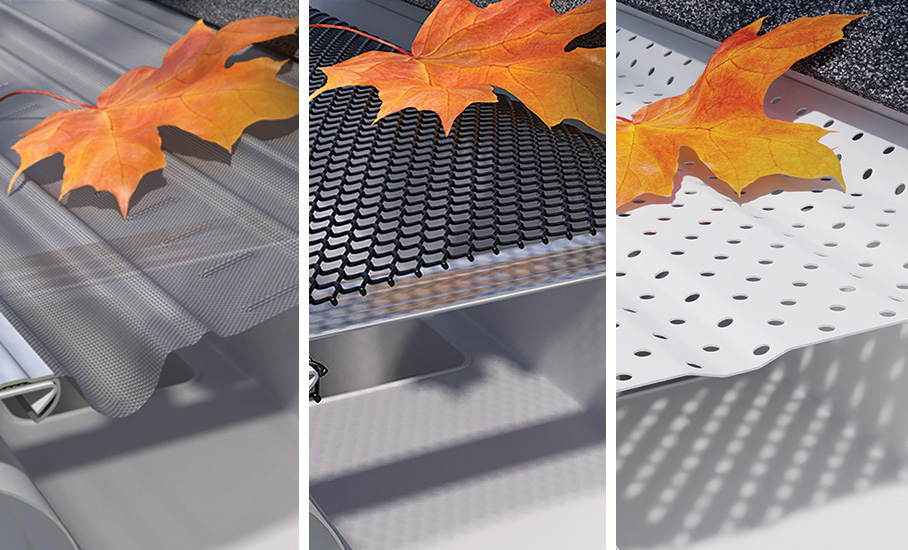
But not all gutter protection is created equal. For fire resistance, PVC, foam inserts and brush guards are not good options and are not permitted by the International Wildland-Urban Interface Code.® For true fire resistance, noncombustible materials, such as aluminum, powder-coated steel, stainless steel and tightly woven stainless-steel mesh should be used.
It is easy for manufacturers to make a lot of lofty claims when touting features and benefits around fire hardening. It’s another thing to prove them. Let’s start with testing.
When it comes to fire hardening, a Class A fire rating is the highest and best classification for building products. Class A fire-rated building assemblies play a critical role in enhancing the safety, resilience and longevity of structures. These materials are specifically designed and tested to offer the highest level of resistance to fire spread, making them essential components in modern building practices where safety standards and risk mitigation are paramount.
Gutter protection products are tested for fire protection in several ways. The first and most common is ASTM E-84, “Standard Test Method for Surface Burning Characteristics of Building Materials.” Also known as the Steiner Tunnel Test, it is the standard method for evaluating the surface burning characteristics of building materials. It measures how quickly flames spread across a material and how much smoke is produced when exposed to a controlled flame for 10 minutes in a horizontal tunnel setup (typically 24 inches wide by 24 feet long) with forced airflow.
Taking this a step further is the more advanced ASTM E2768, “Standard Test Method for Extended Duration Surface Burning Characteristics of Building Materials.” This standard test method evaluates surface burning for an extended duration. It is designed to assess the ability of materials to limit the surface spread of flames under controlled laboratory conditions for a duration of 30 minutes.
It is important to note only certain gutter guards will fall within these flame spread classifications: All aluminum, powder-coated steel, stainless steel and tightly woven stainless-steel mesh products should be covered under these standards if properly tested and approved. However, ask your supplier for proof from the manufacturer that their products meet these standards.
Gutter protection products rated at these designations can significantly slow the progression of flames across sufaces, buying valuable time for occupants to evacuate and or emergency responders to act.
Flying embers
As previously mentioned, aluminum, powder-coated steel and stainless-steel gutter guards are best in many applications for flame spread resistance. However, when it comes to flying embers, that is something entirely different. In fact, the California Department of Forestry and Fire Protection estimates 60% to 90% of the homes that caught fire in Southern California in 2025 resulted from flyer embers.
When it comes to embers, size of gutter guard holes matters. Standard aluminum and mesh gutter guards have holes that are great at managing water flow and are perfect in areas where there isn’t fine debris like pine needles and oak pollen. However, flying embers can get through those holes, subsequently igniting anything inside the gutter and potentially causing fire spread.
Gutter protection is just another way to further reinforce homes
For added protection, particularly in fire-prone areas, look for gutter protection made with tightly woven stainless-steel mesh. This type of product not only keeps fine debris out of gutters, it also meets critical ASTM E-84 and ASTM 2768 flame spread standards while preventing embers from getting into a gutter.
The challenge is there is no standardized official ember intrusion test for gutter protection like there is for flame spread. In early 2025, I worked with experts at QAI Laboratories, Rancho Cucamonga, Calif., to see whether we could apply existing testing methodology currently used for exterior roof vents to stainless-steel mesh gutter guards.
We used ASTM E2886/E2886M-20, “Standard Test Method for Evaluating the Ability of Exterior Vents to Resist the Entry of Embers and Direct Flame Impingement.” Often called an “ember intrusion” test, this test method evaluates the ability of exterior vents that mount vertically or horizontally to resist the entry of embers and flame penetration through the vent.
Working with our research and development team from E-Z Gutter Guard, St. Clair, Mo., and QAI Laboratories, we conducted the test with positive results—no signs of ember intrusion and no evidence of ignition or charring of the cotton pad test material. It was a simple concept that yielded powerful results.
It’s important to note gutter protection is only one, albeit critical, piece of a large puzzle of complementary building products needed to fire-harden homes. Gutter protection is just another way to further reinforce homes.
Future building codes
Gutter guard protection is a small but mighty component of any building assembly. When working in tandem, all building products that meet strict fire requirements can potentially save lives, protect properties, earn more favorable ratings by insurance companies, and, of course, meet the evolving landscape of local and state building codes.
The challenge remains for manufacturers to get their share of attention from code writers and fire organizations about the importance of this product category. As the roofing industry has learned through the years, weather tragedies often bring enhancements and stricter building codes. For example, Florida and its highly advanced Miami-Dade County Building Codes were driven by multibillion-dollar weather events that continue to devastate that part of the U.S. year after year.
In California, the building codes include some of the most advanced fire-hardening regulations in the U.S., largely driven by the state’s increasing exposure to wildfires. These requirements are primarily found in the California Building Code and the California Residential Code, particularly in Chapter 7A, which applies to structures located in Wildland-Urban Interface zones.
Regarding gutter protection in the California Building Code, it is a bit vague and open to interpretation: “705A.4 Roof gutters. Roof gutters shall be provided with the means to prevent the accumulation of leaves and debris in the gutter.”
“Means” could be anything including types of gutter protection that will easily melt or be compromised with high heat and fire. Roofing contractors should be aware of what works and does not work when it comes to fire resistance to properly educate homeowner customers.
Overall, California’s fire-hardening regulations aim to create a system where structures are less likely to ignite even in severe wildfire conditions, thereby improving community resilience and firefighter safety.
Although fires aren’t unique to California, other states may not have as strict regulations and follow other codes that may be less restrictive. It’s time for building code writers to argue for the inclusion of this simple, yet powerful building component that inhibits ember intrustion and slows fire spread.
A great opportunity
As wildfires become more frequent and structural fire risks continue to rise, the roofing industry is uniquely positioned to raise its voice about the critical importance of the right way to fire-harden a roof system. It is about educating homeowners and implementing the right solutions.
If you are not selling gutters or gutter protection as part of your sales pitch, you may want to consider doing so. While your crews install Class A roof assemblies, adding the right gutter protection can be the perfect complement to a homeowner’s fire-hardening efforts as well as creating a profitable extension to your services.

MIKE CELLURA
Western regional sales manager
E-Z Gutter Guard, St. Clair, Mo.