AI causes issues in work relationships
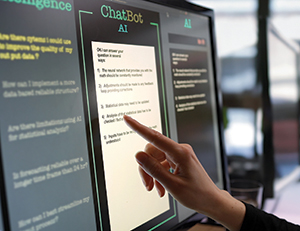
The Harvard Business Review recently published an article, “How AI Damages Work Relationships—And Where It Can Actually Help,” by Amy Gallo, where she shares the following problems caused by including AI in work relationships:
- It creates “workslop,” not efficiency. When not used thoughtfully, AI can make your work more difficult. If AI helped your co-worker write a report more quickly, you now likely need to check sources and decide whether the information is valuable. Colleagues receiving AI workslop would then need to take extra steps to decode and correctly interpret information and submitted work.
- It damages trust. The workslop research revealed about half of survey respondents viewed co-workers who sent workslop as less creative, less capable and less reliable than previously believed. Forty-two percent viewed them as less trustworthy, and 37% viewed them as less intelligent.
- It eliminates necessary friction. Many employees use AI to help navigate conflict and respond to difficult interpersonal situations. Gallo says: “I’m a big believer that we need tension and messiness to do good work. The friction, the back-and-forth, even the occasional miscommunication—these aren’t bugs in the system, they’re features. They’re how we collaborate, build understanding, and create something better together.”
- It prevents us from building real relationships. When employees turn to AI instead of people, relationships weaken. “When things go completely smoothly with someone, it may feel good, but we don’t necessarily grow or bond,” Gallo says. “It’s in awkward moments, expressions of vulnerability, and the clearing up of miscommunications that we get to know others, and ourselves, better.”
- It may be training us to be less civil. When collaborating with AI, you don’t have to worry about its feelings. And many generative AI programs tell you what you want to hear. This can affect relationships with co-workers as you may have less patience when there is a disagreement or be less understanding if there is a result you do not like.
However, Gallo says when used intentionally, AI can be helpful in the workplace; she provides the following recommendations:
- Be transparent when you have used AI. Being upfront about your use of AI helps to reduce the cognitive load for your co-workers and helps you keep their trust. Note that some people may use AI as an accommodation if they are dyslexic, for example.
- Reserve AI for transactional relationships. If an interaction is purely transactional and you are not building a relationship with someone, AI can be useful. For example, you might use AI to write a firm email to a general contractor who is not delivering work as promised. But do not use it in relationships when you are trying to build trust and connection.
- Use AI to strengthen human relationships—not replace them. You can ask AI for ideas about how to build rapport with a new co-worker or conversation starters for a one-on-one meeting. This way, you are using it to help make an initial connection but not to build a trusting relationship.
- Recognize you have different norms for people versus AI. Take a moment to identify and distinguish between how you want to handle your in-person conversations and how you want to handle your interactions with AI.
Help define quality workmanship
NRCA and the Insurance Institute for Business & Home Safety have partnered to collect insights from professional roofing contractors about what defines quality workmanship in residential roofing.
To take the survey, click here.
In addition, the survey asks about common causes of roof system failure, customer priorities and real-world challenges in the field.
By capturing these perspectives, the goal is to better understand the gaps between building codes, best practices and homeowner expectations. The findings will help improve product recommendations, installation standards and customer education, ultimately leading to stronger, more durable roof systems and better-informed decision-making across the U.S.